Wisteria is one of the most stunning climbing plants, producing cascades of fragrant flowers in shades of white, pink, lilac and deep purple. Whether trained over a pergola, archway, trellis or wall, a well-maintained Wisteria creates a breathtaking display each spring and early summer.
Regular pruning is the key to keeping your Wisteria healthy, controlling its size, and encouraging abundant flowering year after year. Once you understand the basics, pruning is straightforward and rewarding.

When to Prune Wisteria
Wisteria benefits from pruning twice a year:
Summer Pruning (July–August)
After flowering has finished, cut back the long, vigorous green shoots that have grown during the season. These shoots can become unruly and quickly outgrow their allotted space.
Reduce each shoot to around five or six leaves from the main framework. Summer pruning helps keep the plant tidy, prevents excessive growth around windows and gutters, and encourages the development of flower buds for the following year.
Winter Pruning (January–February)
During winter, shorten the same shoots that were pruned in summer, cutting them back further to two or three buds. This creates a neat framework and concentrates the plant's energy into producing flowers rather than excessive foliage.

Renovating an Overgrown Wisteria
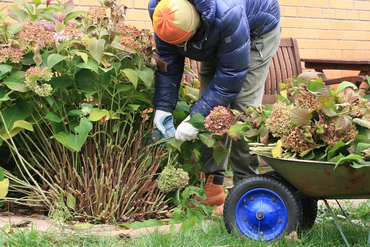
Older or neglected Wisteria plants may require more substantial pruning. Remove any dead, damaged or congested growth and cut back long, woody stems to strong younger shoots where possible.
If necessary, some branches can be reduced back to a main stem to restore the plant's structure. Take your time when carrying out hard pruning and aim to create a well-spaced framework of branches. While this type of renovation may temporarily reduce flowering, it encourages healthy new growth and can rejuvenate an ageing plant.
Winter is the best time to carry out more extensive pruning work.
Training Wisteria for Best Results
Although Wisteria will naturally climb and spread, proper training helps maximise flowering and creates an attractive display.
For wall-grown plants, install sturdy horizontal galvanised wires to support the stems as they develop. Wisteria is also ideal for pergolas and arches, where the hanging flower clusters can be enjoyed from below.
Wisteria can even be trained into a tree form or allowed to climb through an existing tree. If growing through a tree, plant it approximately one metre from the trunk on the sunniest side. Bear in mind that dense tree canopies may reduce flowering by limiting the amount of sunlight reaching the plant.
Choosing the Right Wisteria Variety
The classic blue-lilac varieties are the most familiar, but there are many beautiful alternatives available.
Popular varieties include:
- Wisteria sinensis ‘Prolific’ – one of the most widely grown and reliable flowering varieties.
- Wisteria sinensis ‘Amethyst’ – produces richly coloured violet-purple blooms.
- Wisteria floribunda ‘Domino’ – known for its elegant flower clusters and excellent fragrance.
- Wisteria brachybotrys ‘Showa-beni’ – a beautiful pink-flowering variety with a delightful scent.
An interesting feature of Wisteria is the direction in which it twines. Wisteria floribunda twines clockwise, while Wisteria sinensis twines anti-clockwise.
Find Your Perfect Wisteria
With the right pruning and training, Wisteria will reward you with years of spectacular floral displays. Visit Carpenters Nursery our friendly garden centre in St. Albans, Hertofordshire to explore our range of Wisteria varieties and pick up all the tools and accessories you need to keep your plants looking their very best.