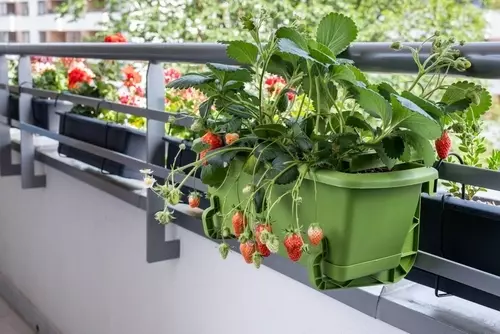
Imagine stepping out onto your balcony and picking fresh, homegrown fruit whenever you like. It’s easier than you might think. Many fruit trees and bushes thrive in containers, offering both beauty and flavour in compact spaces. With the right care, including regular pruning, they’ll stay healthy and productive. Learn how and when to prune fruit trees.
Here’s how to create your own productive balcony garden.
Tips for balcony gardening
When growing fruit on a balcony, keep these key points in mind:
- Containers filled with compost can become very heavy, especially after watering. Choose lightweight plastic or fibreglass pots instead of terracotta, and make sure they’re secure so they won’t tip or blow over.
- Most fruiting plants need at least six hours of sunlight each day. However, some options tolerate partial shade, including alpine strawberries, gooseberries and blackcurrants. Assess how much sun your balcony receives before selecting your plants.
- Balconies are often exposed to wind, which can damage plants and reduce yields. Adding a windbreak such as bamboo screening fixed to railings can provide essential protection.
- Make the most of limited space with clever solutions like railing planters or vertical growing systems.
Pollination on a balcony
For fruit to develop, flowers must be pollinated. Some varieties require pollen from another plant, while others are self-fertile and can produce fruit on their own. Since space is limited, it’s usually best to choose self-fertile varieties.
You can also encourage pollination by adding bee-friendly plants. Hardy, drought-tolerant choices such as sea thrift, lavender and thyme are ideal for balcony conditions and will help attract pollinators.
Best fruits to grow on a balcony
- Strawberries are one of the easiest options for containers. They look attractive throughout the season, and modern varieties like the ‘Summer Breeze’ series offer colourful flowers and extended harvests.
- Ballerina apples are perfect for small spaces thanks to their upright growth habit. However, they are not self-fertile, so you’ll need another compatible apple or crab apple nearby for pollination.
- Blueberries thrive in pots filled with ericaceous (acidic) compost. They also add ornamental value with spring flowers and vibrant autumn colour. If growing just one plant, opt for a self-fertile variety such as ‘Bluecrop’ or ‘Sunshine Blue’.
- Gooseberries are reliable and easy to grow in containers. They tolerate some shade and are self-fertile, so a single plant will still produce a good crop.
With the right setup and plant choices, even a small balcony can become a productive mini orchard. Explore a wide range of fruit trees and soft fruit, and you’ll soon be enjoying your own fresh harvest at home.